Maison
Dior
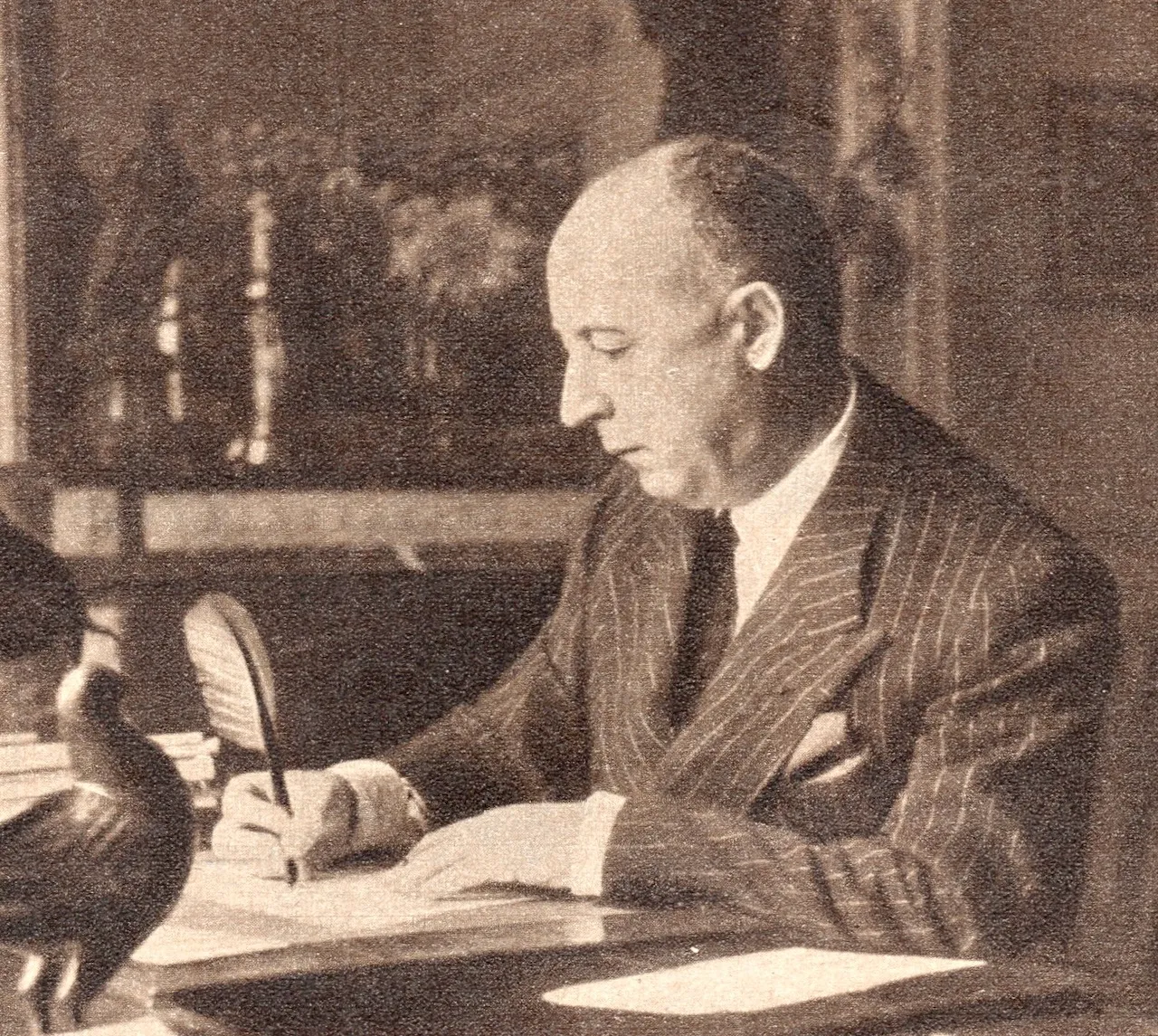
Founded in December 1946 at 30 avenue Montaigne, Paris, by Christian Dior (1905–1957), with financial backing from textile industrialist Marcel Boussac. The first collection — shown on 12 February 1947 — was christened the New Look by Harper's Bazaar editor Carmel Snow and reset the silhouette of post-war womenswear almost overnight.
Creative director (women's, men's, and couture): Jonathan Anderson, since June 2025, succeeding Maria Grazia Chiuri on the women's side and Kim Jones on men's. The house is owned by Christian Dior SE, the family holding company of Bernard Arnault, which controls LVMH Moët Hennessy Louis Vuitton; Christian Dior Couture sits inside the LVMH Fashion & Leather Goods division.
Volatile fields — Anderson's joint womenswear-and-menswear remit was announced in 2025 and the studio organisation is still bedding in; verify creative-director and ownership lines against fresh sources before publishing.


Design DNA
An architectural femininity inherited from the founder — the cinched waist, the rounded shoulder, the bell-skirt and the pencil-line. Codes recur across decades: the cannage caning motif lifted from the Napoleon III chairs of the Avenue Montaigne salon; lily-of-the-valley as the founder's lucky flower; gris Dior, ivory, and a couture black; toile de Jouy reissued in successive variations; and a long romance with the tailleur Bar as the silhouette every successor must reckon with.
Cultural impact & collaborations
The New Look is the most-cited single collection in twentieth-century fashion — the moment a designer is widely credited with restoring Paris's post-war centrality. Dior's successors made the house a generational stage: Saint Laurent's Trapèze, Bohan's long stewardship of bourgeois elegance, Galliano's historicist couture, Simons's modernist reset, and Chiuri's reframing of the codes through an explicitly feminist lens. The house has anchored cinema, dance, and contemporary art collaborations through the Lady Dior As Seen By and Dior Lady Art programmes, and remains a fixture of red- carpet and royal dressing on both sides of the Atlantic.
Beyond the timeline
A reason to exist beyond a timeline — the pieces that made Dior Dior.
- The Bar suit 1947
The cream shantung jacket with rounded, padded hips over a pleated black wool skirt — the founding gesture of the New Look and the silhouette every later creative director has had to reinterpret. Harper's Bazaar's Carmel Snow supplied the name on the spot: "It's such a new look."
- Miss Dior 1947
The house's first fragrance, a green chypre composed by Jean Carles and Paul Vacher, named after the founder's sister Catherine — a Resistance fighter deported to Ravensbrück. The scent has been reformulated and rebottled across decades while keeping its place as a Dior cornerstone.
- J'adore 1999
The amber-floral fragrance composed by Calice Becker in a gold-collared amphora flacon — the commercial juggernaut that, with successive Charlize Theron campaigns, became one of the best-selling women's perfumes in the world.
- Lady Dior bag 1995
The cannage-quilted top-handle bag — originally called the Chouchou — gifted to the Princess of Wales by Bernadette Chirac and so closely associated with her that the house renamed it in her honour in 1996. Its charm-strung "D-I-O-R" letters and structured silhouette made it the template for the modern It-bag.
- Saddle bag 1999
Galliano's asymmetric, stirrup-clasped shoulder bag — retired in the late 2000s, then reissued by Maria Grazia Chiuri in 2018 to a generation that had only known it from Sex and the City reruns.
- Book Tote 2018
Chiuri's oversized canvas tote, rendered in successive embroidered toile de Jouy, monogram, and cannage variations — a workaday silhouette absorbed into the couture vocabulary.
- Sauvage 2015
The men's fragrance composed by François Demachy and fronted by Johnny Depp — the commercial anchor of the Parfums Christian Dior business in the 2010s and 2020s.
- <em>Dior and I</em> 2014
Frédéric Tcheng's documentary on Raf Simons's first couture collection — a rare on-record portrait of the petites mains and the eight-week compression of an haute couture studio at work.
Main product lines
- Haute couture — presented in Paris twice yearly
- Ready-to-wear — women's (Dior) and men's (Dior Men)
- Handbags & small leather goods — anchored by the Lady Dior, Saddle, Book Tote, and Bobby
- Parfums Christian Dior — fragrance, makeup, and skincare, including J'adore, Miss Dior, Sauvage, and Rouge Dior
- Fine jewellery & watches — Victoire de Castellane's Dior Joaillerie and the Grand Bal / Grand Soir watches
- Baby Dior & Dior Maison — childrenswear and home
Market positioning
Ultra-luxury. Dior sits at the apex of LVMH's fashion and leather goods portfolio alongside Louis Vuitton, with pricing and distribution calibrated to couture-house credibility and a global fragrance-and-beauty business of exceptional scale.
Business scale
Christian Dior Couture reported revenues of approximately €9.5 billion in recent years (per LVMH-published segment figures, 2023–2024); Parfums Christian Dior is one of the largest selective fragrance and beauty businesses in the world. Figures move; verify against LVMH's latest published accounts before citing.