Maison
Dolce & Gabbana
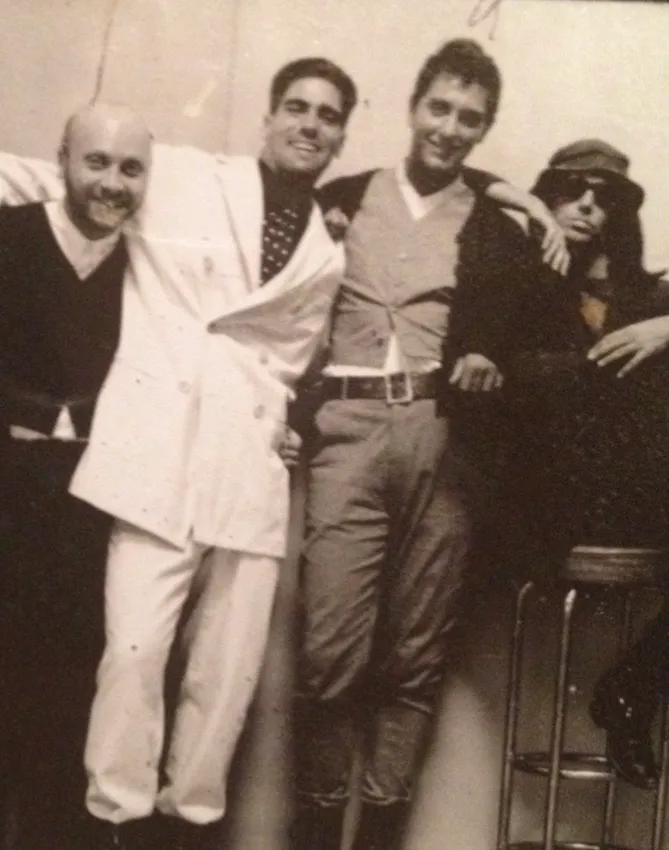
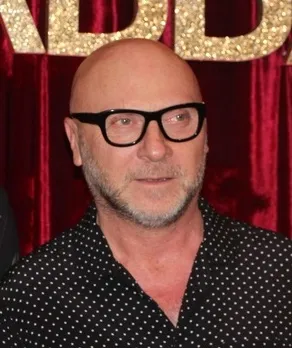
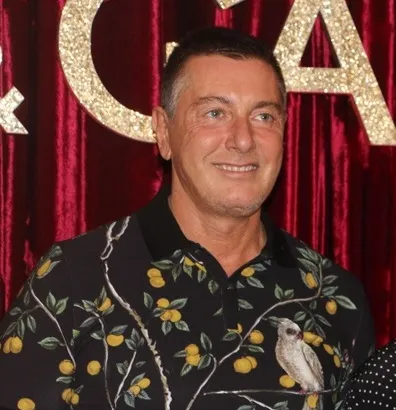
Founded in 1985 in Milan by Domenico Dolce (b. 1958, Polizzi Generosa, Sicily) and Stefano Gabbana (b. 1962, Milan), who met working as assistants in a Milanese atelier. The pair presented their first runway show as part of the Nuovi Talenti group at Milan Fashion Week in October 1985 and showed their first solo women's collection the following year.
Co-creative directors and co-owners: Domenico Dolce and Stefano Gabbana, since founding in 1985. The two have remained jointly at the creative helm continuously, through and beyond the end of their personal partnership in 2005 — an unusually stable creative-director situation by the standards of contemporary luxury fashion.
Volatile fields — verify ownership structure and any succession announcements against fresh sources before publishing.


Design DNA
Sicilian sensuality reframed as luxury: the black-lace widow's dress, the corseted slip, leopard print used as a neutral, baroque ornament drawn from Italian Catholic iconography — saints, gilded altarpieces, votive imagery — and a tailoring vocabulary rooted in mid-century Italian cinema. The codes are ornamental and overtly feminine where Armani's are reductive, and unapologetically rooted in a single regional culture.
Cultural impact & collaborations
Dolce & Gabbana built one of the most identifiable design vocabularies in late-twentieth-century Italian fashion by drawing, more openly than any peer of comparable scale, on a single regional culture — Sicily. The black-lace dress, the corset, the leopard print, and the baroque ornament that followed entered popular culture through Madonna's Girlie Show wardrobe in 1993 and the Hollywood red carpet thereafter. The 2018 China incident remains a reference point in industry discussions of brand communication and cross-cultural marketing. The house's continued joint creative direction by its two founders, four decades on, is among the rarest arrangements in contemporary luxury.
Beyond the timeline
A reason to exist beyond a timeline — the pieces that made Dolce & Gabbana Dolce & Gabbana.
- The Sicilian black-lace dress 1986–
The slip-cut black-lace dress, often paired with a black headscarf and rosary — the founders' transposition of the Sicilian widow's mourning wardrobe into eveningwear, and the single image most associated with the house's early identity.
- The corset dress 1990s–
A boned, structured bodice married to a flowing skirt — the house's reinvention of mid-century Italian glamour as contemporary red-carpet eveningwear, worn by Monica Bellucci, Isabella Rossellini, and a generation of actresses afterwards.
- Leopard print
Used as a recurring base rather than an accent — coats, dresses, lingerie, accessories — leopard became, in the house's hands, a Sicilian neutral on equal footing with black.
- <em>Light Blue</em> 2001
The Mediterranean-accented women's fragrance composed by Olivier Cresp — Sicilian lemon, apple, cedar, bellflower — that became one of the best-selling perfumes of the 2000s and the commercial anchor of the beauty line.
- The Sicily bag 2009
A trapeze-shaped top-handle bag in textured calfskin, named for the founders' shared homeland — the house's best-known leather-goods icon.
- Alta Moda 2012–
The biannual women's couture programme, staged in evolving Italian locations — Taormina, Portofino, Venice, Syracuse, Alta Badia — that has become as much a tourism event as a fashion one, presented to a private clientele alongside Alta Sartoria menswear and Alta Gioielleria fine jewellery.
- Tailoring rooted in Italian cinema
Sharp men's suiting and the corseted-yet-fluid women's silhouette, drawn explicitly from neorealismo and mid-century Italian film — Visconti, Rossellini, the wardrobes of Anna Magnani and Sophia Loren — translated into contemporary ready-to-wear.
Main product lines
- Dolce & Gabbana — women's and men's ready-to-wear
- Alta Moda — women's haute couture, presented in Italian locations since 2012
- Alta Sartoria — men's hand-tailored couture, since 2013
- D&G — diffusion line launched in 1994 and discontinued in 2011
- Fragrance & beauty — including Light Blue, The One, and Dolce
- Eyewear, footwear, accessories, and leather goods — including the Sicily bag
- Children's wear and home
Market positioning
Ultra-luxury at the ornamental, maximalist end of the Italian luxury spectrum — a deliberate counterweight to the Milanese minimalism associated with Armani and Prada. Pricing across ready-to-wear, leather goods, and Alta Moda couture sits at the highest tier of the market.
Business scale
The Dolce & Gabbana group generates annual revenues on the order of €1.5–2 billion in recent reporting years, with a vertically integrated business spanning ready-to-wear, couture, fragrance, beauty, eyewear, and accessories. The group remains privately held by its two founders — figures fluctuate, so verify against the latest published accounts before citing.