Maison
Fendi
Founded in 1925 in Rome by Adele Casagrande (1897–1978) and her husband Edoardo Fendi (1888–1954) as a small fur-and-leather atelier and shop on Via del Plebiscito. Their five daughters — Paola, Anna, Franca, Carla, and Alda — entered the business through the 1940s and 1950s and ran the house collectively for the better part of half a century.
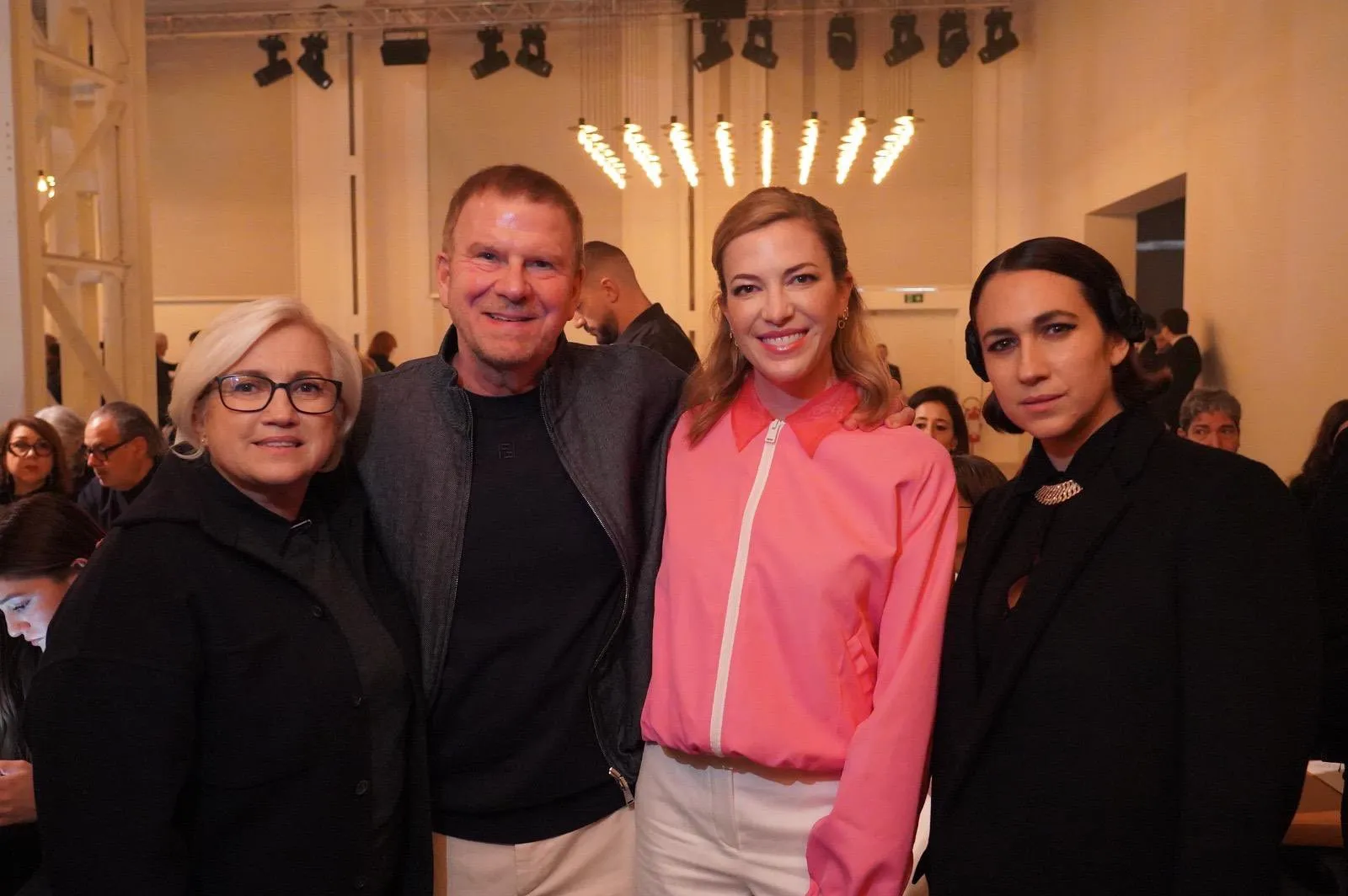
As of early 2026, the artistic-director seat for womenswear and couture remains vacant following Kim Jones's exit in October 2024. Silvia Venturini Fendi continues to lead accessories and menswear, and Delfina Delettrez Fendi oversees jewellery. The house is owned by LVMH Moët Hennessy Louis Vuitton.
Volatile fields — verify the womenswear / couture appointment and LVMH stake against fresh sources before publishing.


Design DNA
A Roman house defined by the transformation of fur and leather into modern luxury. The codes are the interlocking FF Zucca monogram, the saddle-stitched Selleria leather work, fur treated as a textile rather than a status symbol — sheared, woven, dyed, and cut on the bias — and a colour vocabulary that runs from tobacco and earth to the terracottas of Rome itself.
Cultural impact & collaborations
Fendi turned fur — historically a static luxury — into a dynamic fashion material, and turned a Roman family workshop into a global house without surrendering its address. The Baguette defined the It-bag economy of the late 1990s and 2000s; the FF monogram is one of the half-dozen most quoted graphic marks in the industry. Through the restoration of the Trevi Fountain (announced in 2013 and completed in 2015) and the occupation of the Palazzo della Civiltà Italiana, the house has bound its identity to the visible fabric of Rome.
Beyond the timeline
A reason to exist beyond a timeline — the pieces that made Fendi Fendi.
- The <em>Selleria</em> leather work 1930s–
The hand-saddle-stitched leather goods that descend from the house's earliest workshop output — heavy cuoio Romano finished with the contrasting double seam that became a Fendi signature long before the FF monogram existed.
- The FF <em>Zucca</em> monogram 1965
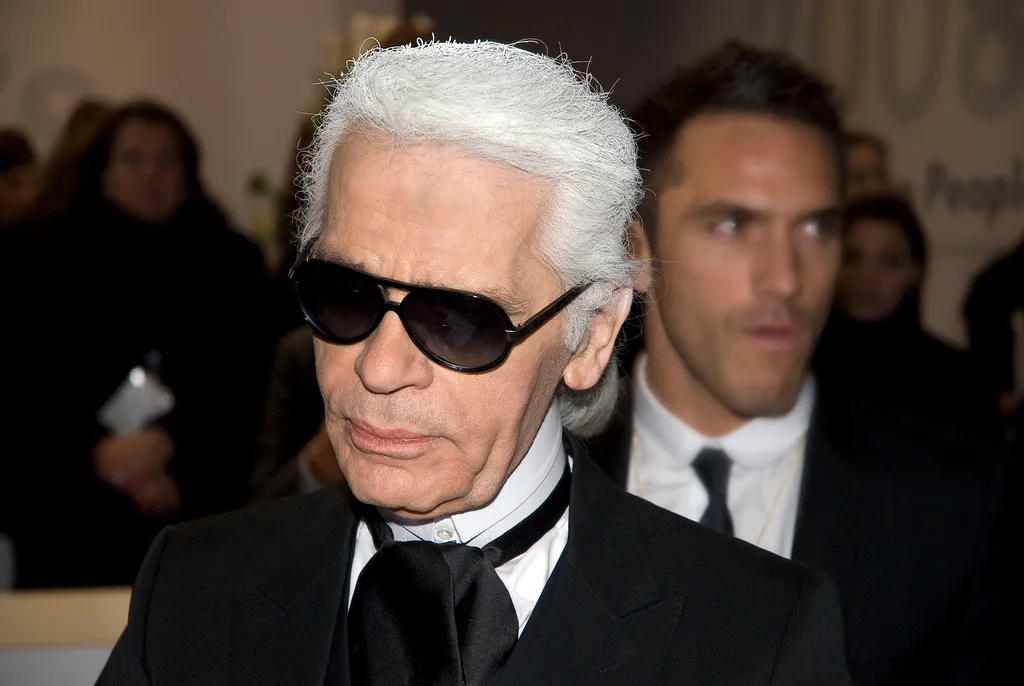
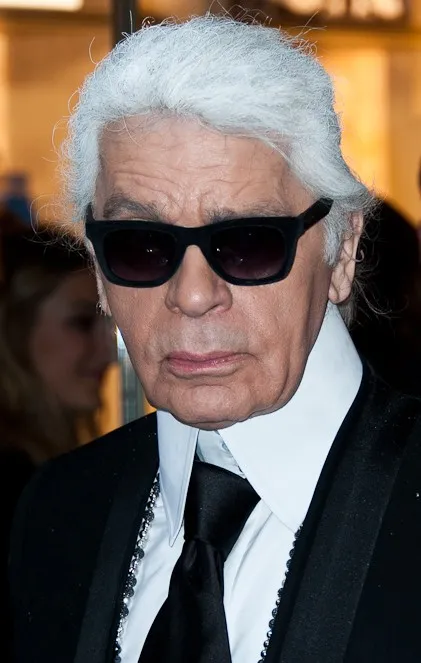
Designed in Lagerfeld's first weeks at the house, the interlocking double-F was drawn from the phrase "Fun Furs" — Lagerfeld's reframing of fur as a wardrobe material rather than a dynastic heirloom. Printed on canvas, it became one of the most recognised monograms in luxury.
- The <em>Baguette</em> 1997
Designed by Silvia Venturini Fendi and named for the way it tucked under the arm like a loaf of bread. Small, soft, and issued in hundreds of fabrications — beaded, sequined, embroidered, in raffia and python — it is widely credited as the first "It-bag" of the contemporary era. Carrie Bradshaw's "It's not a bag, it's a Baguette" line in Sex and the City sealed its place in the wider culture.
- The <em>Peekaboo</em> 2008
A structured top-handle bag with a hinged double compartment that opens to reveal a contrasting interior — the pun of the name. Conceived by Silvia Venturini Fendi as a piece that rewards a closer look, it became the house's principal structured-leather icon of the 2010s.
- Fur as textile 1965–
Lagerfeld's most consequential intervention at Fendi was technical rather than decorative — he treated fur as a material to be cut, sheared, dyed, woven into intarsia, and reassembled in panels, rather than draped as a single pelt. The sisters' workshop made the experiments possible; the collections that followed redrew what a fur coat could be.
- The <em>Palazzo della Civiltà Italiana</em> 2015–
The house's corporate seat in Rome's EUR district — a rationalist travertine building of 1942 often called the Colosseo Quadrato. The choice of address tied the brand explicitly to Roman identity at a moment when most peers were consolidating in Paris or Milan.
- <em>Fendi Couture</em> 2015–
The house's haute-couture line — shown in Paris and built almost entirely on fur, then progressively expanded into leatherwork and embroidery. The July 2016 show staged on the Trevi Fountain remains the most photographed event in the programme.
Main product lines
- Fur & shearling — the founding craft, still designed in-house in Rome
- Leather goods & handbags — anchored by the Selleria, Baguette, and Peekaboo lines
- Women's ready-to-wear & haute couture — couture shown in Paris
- Men's ready-to-wear
- Fine jewellery — under Delfina Delettrez Fendi
- Eyewear, footwear, fragrance, and home (Fendi Casa)
Market positioning
Ultra-luxury, with a centre of gravity in leather goods and fur and a couture wing positioned to anchor brand prestige. Fendi sits inside the upper tier of LVMH's fashion-and-leather-goods division alongside Louis Vuitton, Dior, Loewe, and Celine.
Business scale
Fendi's revenues are not separately disclosed — LVMH reports the house within its Fashion & Leather Goods segment. Trade-press estimates have placed annual sales in the range of two to three billion euros in recent years; figures move, and any specific number should be re-verified against the latest LVMH commentary before citing.