Maison
Gucci
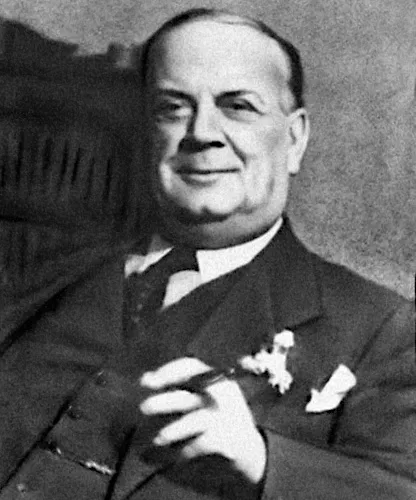
Founded in 1921 in Florence by Guccio Gucci (1881–1953), who opened a small leather-goods shop on Via della Vigna Nuova after a stint as a porter at London's Savoy Hotel — an exposure to the luggage of well-travelled clientele said to have shaped his eye for refined saddlery and fine craftsmanship. The atelier built its reputation on equestrian-inflected leather goods through the 1930s and expanded internationally after the Second World War.
Artistic director: Demna, announced in 2025. Gucci is the flagship house of Kering, the Paris-listed luxury group controlled by the Pinault family through Artémis.
Volatile fields — verify creative-director and ownership lines against fresh sources before publishing.


Design DNA
Equestrian heritage translated into modern luxury: the green-red-green webbing, the snaffle bit, the interlocking-GG monogram, and the diamond-pattern Diamante canvas form a vocabulary built around saddlery, travel, and Florentine leather craft. The house oscillates between two registers — pared, sensual minimalism and ornate, eclectic maximalism — and its most resonant eras (Ford, Michele, De Sarno) have each pushed one register to its limit before the pendulum swings back.
Cultural impact & collaborations
Few houses have ridden the cycle between minimalism and maximalism as visibly as Gucci. Tom Ford's late-1990s tenure rewrote the rules of luxury marketing and creative direction; Alessandro Michele's 2015–2022 run made the house a touchstone for a generation that came of age on Instagram, with collaborations spanning The North Face, Balenciaga (the Hacker Project), Adidas, and Disney. The house's cultural footprint extends through cinema (Ridley Scott's House of Gucci, 2021), music (Harry Styles's tailoring, Jared Leto's red-carpet appearances), and a thicket of watch-store, sneaker, and streetwear scandals that continue to shape how luxury is debated online.
Beyond the timeline
A reason to exist beyond a timeline — the pieces that made Gucci Gucci.
- The Bamboo bag 1947
A structured leather handbag with a single curved handle of heat-bent bamboo — a postwar improvisation born of leather and metal shortages that became one of the house's enduring silhouettes. Reissued continuously since.
- The Horsebit loafer 1953
A flat-bottom moccasin trimmed with a gilt snaffle-bit ornament — the explicit equestrian reference that transformed a casual shoe into a global menswear staple, worn by bankers, film stars, and, eventually, the Museum of Modern Art's permanent collection.
- The green-red-green web 1960s–
A flat woven stripe drawn from the saddle girth, applied to luggage, belts, sneakers, and ready-to-wear. Among the most recognisable pieces of trade dress in fashion — and a shorthand the house has periodically restrained, then revived, with each new creative direction.
- The Jackie bag 1961
A soft, slouchy hobo with a piston closure, originally sold as the Constance and renamed after Jacqueline Kennedy Onassis was repeatedly photographed carrying it. Reissued under Ford, Giannini, Michele, and again under De Sarno.
- The Flora print 1966
A floral silk-twill scarf reportedly commissioned by Rodolfo Gucci for Princess Grace of Monaco, designed by the Roman illustrator Vittorio Accornero. The motif — densely botanical, faintly art-nouveau — has migrated across scarves, ready-to-wear, and leather goods ever since.
- Tom Ford's velvet suit 1995–2004
The hip-slung trousers, satin shirts, and jewel-toned velvet tailoring of Ford's late-1990s collections — a distilled vision of grown-up sex appeal that pulled the house out of a commercial slump and reset the template for the modern luxury creative director.
- Michele's geek-chic wardrobe 2015–2022
Pussy-bow blouses, oversized pearl-encrusted spectacles, embroidered bombers, kitten heels, and the GG Marmont bag — a romantic, gender-fluid, magpie aesthetic that drew on vintage and bibliographic sources and made Gucci, briefly, the most-quoted house in fashion.
- <em>Gucci Ancora</em> 2023
Sabato De Sarno's debut collection — pared shift dresses, shorts suits, and a saturated burgundy he named Rosso Ancora — a deliberate counter-swing from Michele's maximalism toward quiet, sensual minimalism.
Main product lines
- Ready-to-wear — women's and men's collections shown in Milan
- Handbags & small leather goods — anchored by the Bamboo, Jackie, Horsebit 1955, Dionysus, and GG Marmont families
- Footwear — led by the Horsebit loafer and Princetown slipper
- Fragrance & beauty — operated under licence by Coty, with cosmetics brought in-house in recent years
- Fine jewellery & watches — including the Gucci High Jewelry and Hortus Deliciarum lines
- Eyewear — produced by Kering Eyewear
- Gucci Décor & lifestyle — homeware, luggage, and the Osteria restaurants
Market positioning
Ultra-luxury, with a mass-luxury reach unusual in the segment. Gucci spans entry-price small leather goods and fragrance through high jewellery and made-to-measure, and is consistently among the most valuable brands in global rankings.
Business scale
Gucci is the largest brand in the Kering group, generating annual revenues on the order of seven to ten billion euros in recent years — a band that has narrowed sharply since the 2022 peak. Figures move; verify against Kering's latest published accounts before citing.