Maison
Louis Vuitton
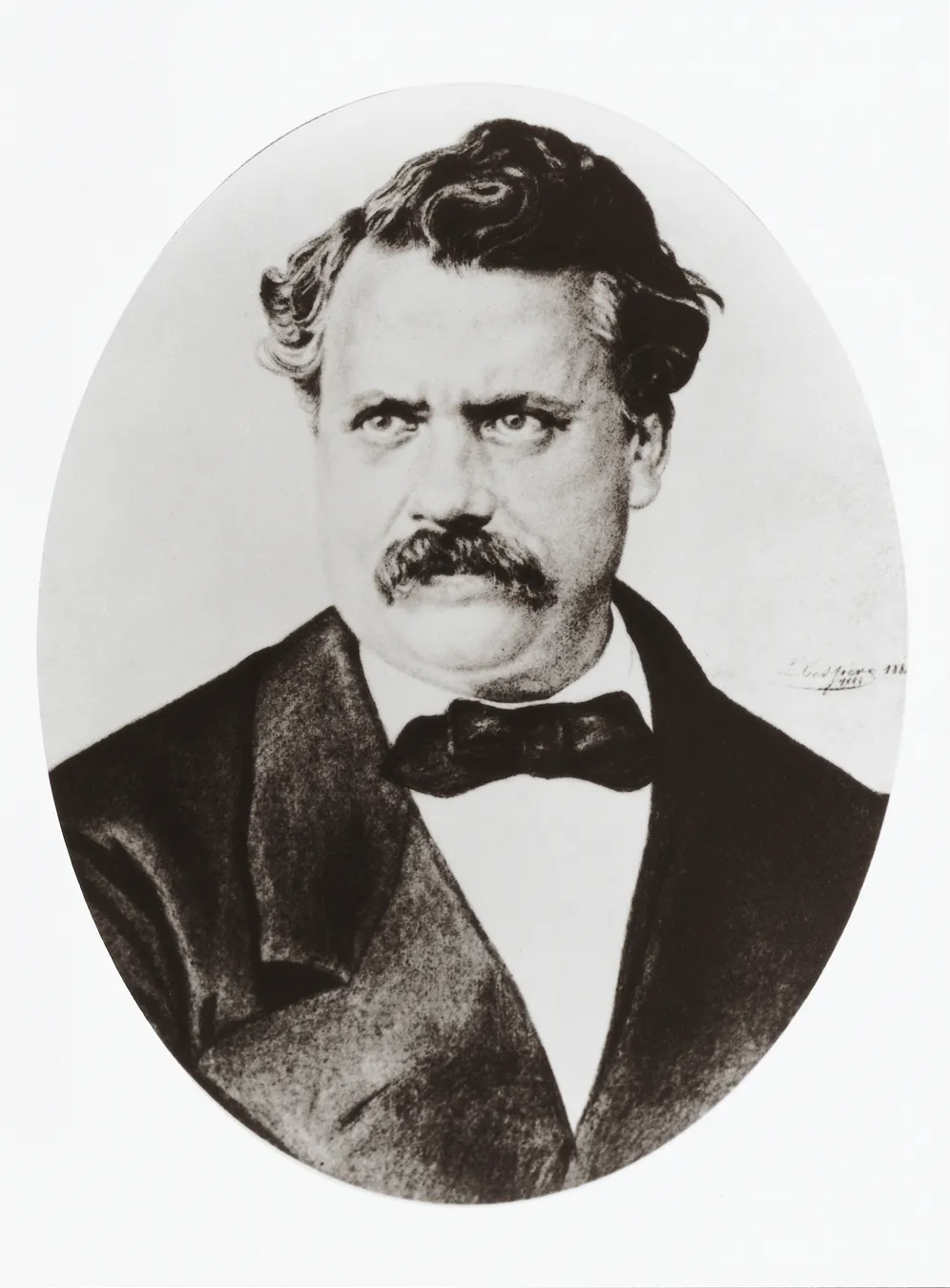
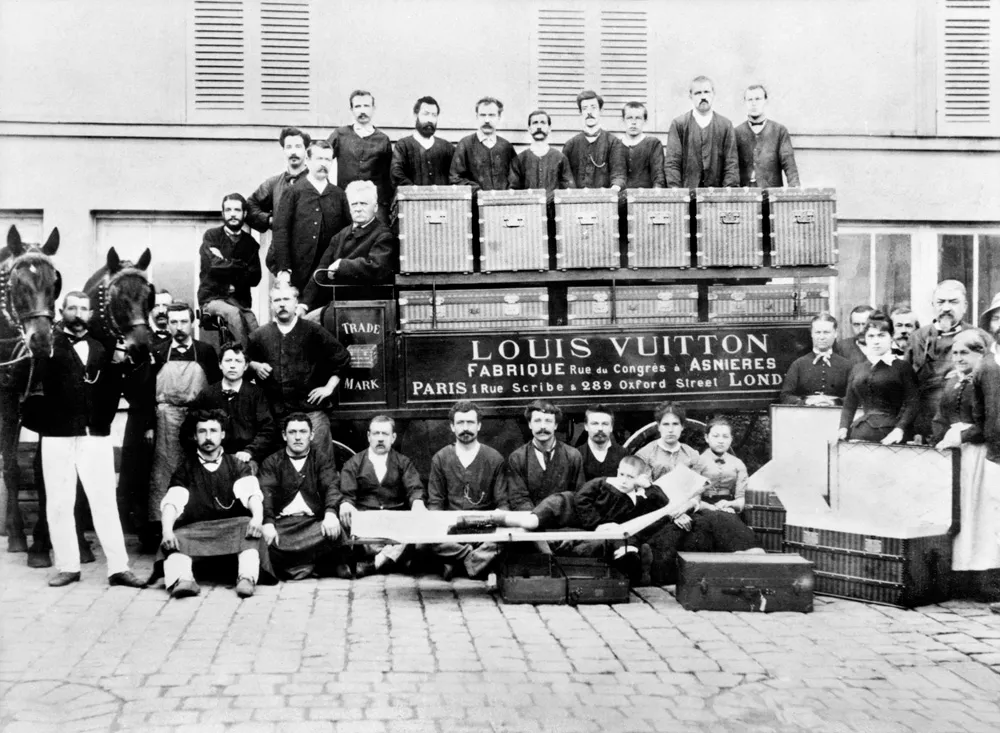
Founded in 1854 in Paris by Louis Vuitton (1821–1892), a layetier-emballeur who had spent years packing trunks for Empress Eugénie before opening his own workshop on rue Neuve-des-Capucines. His innovation was structural — flat-topped, canvas-covered trunks that stacked on the new steam liners and railway carriages, replacing the domed leather chests of an earlier age.
As of 2026, women's collections are led by Nicolas Ghesquière (artistic director since 2013) and men's collections by Pharrell Williams (creative director of menswear since 2023). The house is the flagship maison of LVMH Moët Hennessy Louis Vuitton, controlled by the Arnault family; chairman and CEO Bernard Arnault has overseen the group since 1989.


Design DNA
A house built on the trunk-maker's logic of structure, hardware, and surface. The vocabulary is canvas before leather — the Toile Monogram, the Damier, the Epi grain — paired with brass corners, vachetta-leather trim that ages with use, and the brand-name lock developed by Georges Vuitton in 1890. Under successive designers the silhouette has shifted, but the iconography has remained: monogram and travel, repeated as the through-line from steamer trunk to runway.
Cultural impact & collaborations
Louis Vuitton's monogram canvas is among the most globally recognised pieces of design in any category — clothing, art, or industrial — and the house has used that recognition as a platform for sustained engagement with contemporary art (Sprouse, Murakami, Prince, Kusama, Jeff Koons), architecture (the Frank Gehry-designed Fondation Louis Vuitton in Paris, opened 2014), cinema, music, and sport (the Trophy Trunk commissions for the FIFA World Cup, the America's Cup, and Roland-Garros). Under the LVMH umbrella, the maison has also become a case study in how a nineteenth-century craft business can scale into a twenty-first-century cultural institution without — its defenders argue — losing the workshop logic of the founder.
Beyond the timeline
A reason to exist beyond a timeline — the pieces that made Louis Vuitton Louis Vuitton.
- The flat-topped Trianon trunk 1858
Louis Vuitton's founding object. By replacing the domed lid of the traditional travel chest with a flat top in grey waterproofed canvas, he made the trunk stackable in a ship's hold or a train carriage — and obsolesced an entire generation of luggage in the process.
- The Toile Monogram canvas 1896
Designed by Georges Vuitton as an anti-counterfeiting device, the LV-and-quatrefoil pattern borrowed motifs from the Japonisme then current in Paris and registered them as trademarks. The irony is well-rehearsed — the most counterfeited mark in luxury was conceived to stop counterfeiting — but the canvas remains the visual anchor of the house and the platform on which decades of collaborations have been staged.
- The Keepall 1924
A soft, foldable weekend bag introduced as air travel began to reshape what people carried. Its proportions and double handles became the default for the modern duffel.
- The Noé 1932
Commissioned, the story goes, by a champagne maison that needed to carry five bottles upright; the bucket silhouette with a drawstring closure became one of the house's enduring shapes.
- The Speedy 1930
Originally the Express — a smaller, hand-held version of the Keepall. Audrey Hepburn requested a 25-centimetre version in 1965; the Speedy 25 has been continuously produced ever since.
- The Marc Jacobs collaborations 2001–2013
Stephen Sprouse's graffiti, Takashi Murakami's Multicolore and Cherry Blossom, Richard Prince's Joke bags, Yayoi Kusama's polka dots — Jacobs treated the monogram canvas as a surface for contemporary art, and in doing so rewrote what a heritage luxury house could be in the twenty-first century.
- The Capucines 2013
A structured top-handle bag in plain leather, named for the street of the original 1854 store — Ghesquière's first signature handbag and a deliberate counterweight to the monogram.
- The Pont Neuf show 2023
Pharrell Williams's debut menswear collection, presented on a runway built across the Pont Neuf with a gold-plated Damoflage camouflage and a Jay-Z and Beyoncé performance — the most-watched men's show in the house's history, and a statement about the cultural ambit of luxury menswear in the streetwear era.
Main product lines
- Hard-sided trunks & travel — the founding business, still produced at the Asnières atelier
- Handbags & soft-sided leather goods — the commercial centre of gravity
- Ready-to-wear — women's under Ghesquière, men's under Williams
- Footwear, eyewear, and accessories
- Fragrance — Les Parfums Louis Vuitton, launched in 2016 under master perfumer Jacques Cavallier-Belletrud
- Fine jewellery & watches — including the Tambour watch and high-jewellery pieces from Place Vendôme
- Trophy trunks & special orders — the bespoke commissions of the Asnières workshop
Market positioning
Ultra-luxury, mass-distributed. Louis Vuitton sits at the top tier of pricing while operating a global retail network on a scale matched by few rivals — a hybrid that has defined the house's commercial model for three decades.
Business scale
By common reckoning the largest single luxury brand in the world by revenue. The Fashion & Leather Goods division of LVMH, of which Vuitton is the dominant contributor, reported revenues on the order of forty billion euros in recent years (per LVMH-released figures, 2023–2024); the house does not publish standalone accounts, so figures are estimates derived from group disclosures. Verify against the latest published reporting before citing.