Maison
Saint Laurent
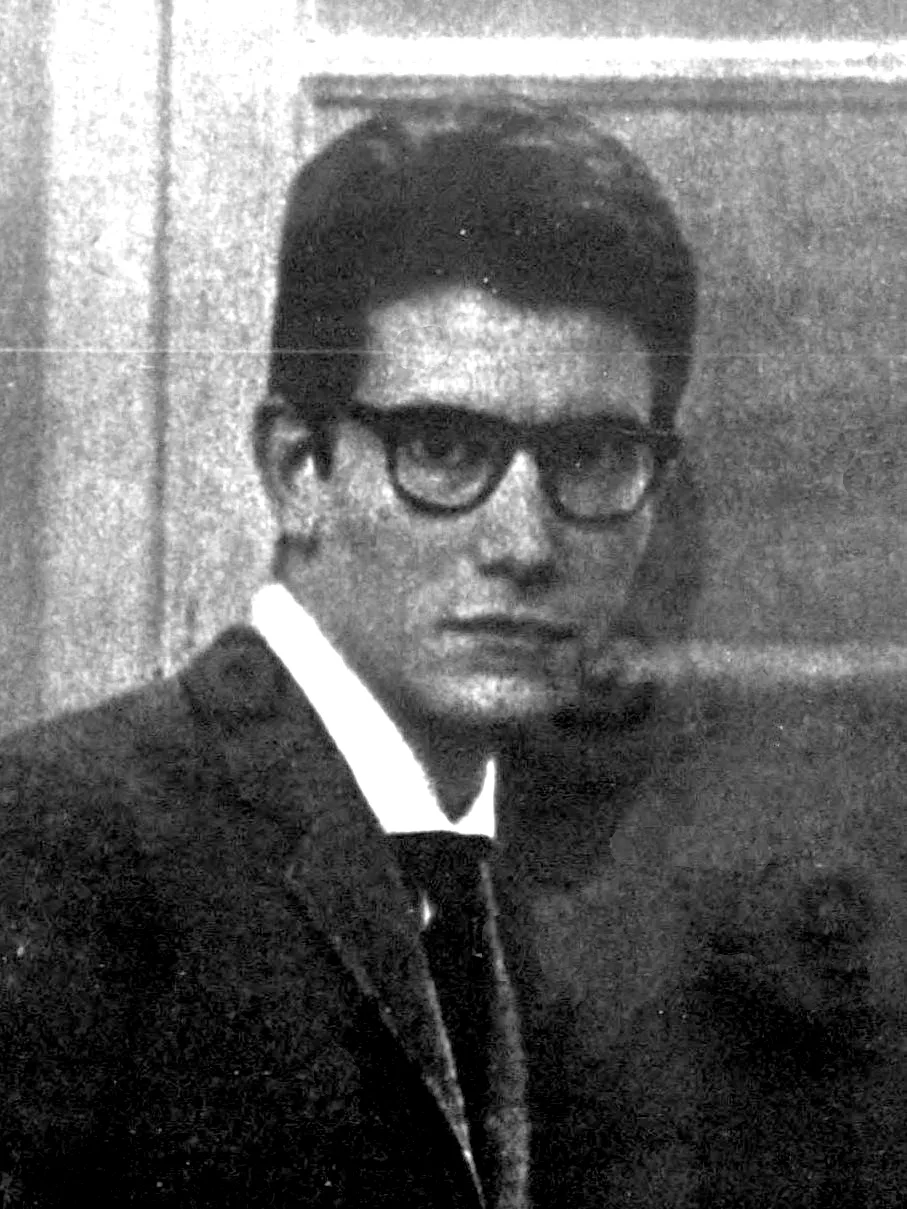
Founded in 1961 in Paris by Yves Saint Laurent (1936–2008) and his partner Pierre Bergé (1930–2017), shortly after Saint Laurent's departure from the House of Dior. The first couture collection was shown in January 1962 at 30 bis rue Spontini.
Creative director: Anthony Vaccarello, since April 2016. The house is owned by Kering, the French luxury group, which acquired it as part of Gucci Group in 1999.
Volatile fields — verify creative-director and ownership lines against fresh sources before publishing.
.jpg)


Design DNA
Le smoking and the sharp shoulder — a rock'n'roll Parisian language built on borrowed menswear, transparent black, and the long, lean leg. Tailoring is precise and sexual rather than soft; eveningwear leans on jet, sequin, and the cut of a tuxedo lapel. The codes are reductive — black, white, gold — punctuated by the bourgeois colour-blocks of the founder's archive (Mondrian, the Russian collection, the ballet-inspired pieces).
Cultural impact & collaborations
Yves Saint Laurent is widely credited with translating twentieth-century menswear — the tuxedo, the safari jacket, the trench, the pea coat — into a women's wardrobe, and with legitimising ready-to-wear as a designer category through Rive Gauche. He was among the first couturiers to cast women of colour on the Paris runway and to draw openly on non-Western visual traditions, a body of work the Fondation Pierre Bergé–Yves Saint Laurent now stewards through museums in Paris and Marrakech. Under Slimane and Vaccarello, the house has become a defining reference for contemporary rock'n'roll tailoring and a fixture of red-carpet and music-led cultural moments.
Beyond the timeline
A reason to exist beyond a timeline — the pieces that made Saint Laurent Saint Laurent.
- Le Smoking 1966
The women's tuxedo — a black wool-and-satin dinner suit cut to the female body. Helmut Newton's 1975 photograph of a model smoking on a Paris street, shot for French Vogue, fixed it in the cultural imagination as a study in androgyny, power, and Parisian cool.
- The Mondrian dress 1965
Sleeveless wool-jersey shifts colour-blocked after Piet Mondrian's Composition grids — primary red, blue, yellow, and white separated by black bands. The seams hide the construction so the painting reads cleanly across the body.
- The safari jacket 1968
A four-pocket bush jacket in cotton gabardine with a corded belt — utility wear pulled out of its colonial context and cut for the boulevard.
- The see-through blouse 1968
A long-sleeved blouse in transparent black chiffon, worn with a black skirt and an ostrich-feather belt — among the most-cited single garments of the late 1960s for its uncovered upper body.
- The peasant collection 1976
The autumn-winter Opéra–Ballets Russes collection — full skirts, gold braid, embroidered boleros — that The New York Times called a revolution. The opulent counterpoint to the tuxedo.
- Opium 1977
The spice-and-resin oriental fragrance whose orientalist name and launch campaign provoked controversy on release — and went on to become one of the bestselling perfumes of its decade.
- The Sac de Jour 2013
A structured, top-handle calfskin tote introduced under Hedi Slimane — clean lines, padlock detail, an assertive silhouette built to anchor the house's reset leather-goods vocabulary.
- The Tribute sandal 2008
A platform sandal with crossed leather straps that became, across two creative directors, a fixture of red-carpet dressing and the most enduring Saint Laurent shoe of the twenty-first century.
Main product lines
- Ready-to-wear — women's and men's, shown in Paris
- Handbags & small leather goods — Sac de Jour, Loulou, Kate, Niki, and the chain-shoulder archive
- Footwear — Tribute sandals, Opyum heels, and the house's pointed-toe boots
- Eyewear and accessories
- Fragrance & beauty — Opium, Black Opium, Libre, and the YSL Beauté cosmetics line, licensed to L'Oréal
- Fine jewellery and watches
Market positioning
Ultra-luxury. Saint Laurent sits at the top of Kering's fashion portfolio alongside Gucci and Bottega Veneta, with leather goods, ready-to-wear, and footwear priced into the upper luxury tier and a beauty-and-fragrance business licensed to L'Oréal.
Business scale
Saint Laurent is one of Kering's largest brands by revenue, reporting on the order of three billion euros in recent years, with strong growth through the Vaccarello era. Figures move; verify against Kering's latest published accounts before citing.